Friday, December 18, 2015

Thomas de Waal, "The Caucasus: An Introduction"

 
Thomas de Waal, "The Caucasus: An Introduction" English | ISBN: 0195399765, 0195399773 | 2010 | 272 pages
 
In this fascinating book, noted journalist Thomas de Waal--author of the highly acclaimed Black Garden--makes the case that while the Caucasus is often treated as a sub-plot in the history of Russia, or as a mere gateway to Asia, the five-day war in Georgia, which flared into a major international crisis in 2008, proves that this is still a combustible region, whose inner dynamics and history deserve a much more complex appreciation from the wider world.

In The Caucasus, de Waal provides this richer, deeper, and much-needed appreciation, one that reveals that the South Caucasus--Armenia, Azerbaijan, and Georgia, and their many smaller regions, enclaves, and breakaway entities--is a fascinating and distinct world unto itself. Providing both historical background and an insightful analysis of the period after 1991, de Waal sheds light on how the region has been scarred by the tumultuous scramble for independence and the three major conflicts that broke out with the end of the Soviet Union--Nagorny Karabakh, Abkhazia, and South Ossetia. The book examines the region as a major energy producer and exporter; offers a compelling account of the Rose Revolution in Georgia, the rise of Mikheil Saakashvili, and the August 2008 war; and considers the failure of the South Caucasus, thus far, to become a single viable region. In addition, the book features a dozen or so "boxes" which provide brief snapshots of such fascinating side topics as the Kurds, Turkish-Armenian rapprochement, the promotion of the region as the "Soviet Florida," and the most famous of all Georgians, Stalin.

The Caucasus delivers a vibrantly written and timely account of this turbulent region, one that will prove indispensable for all concerned with world politics. It is, as well, a stimulating read for armchair travelers and for anyone curious about far-flung corners of the world.

Wednesday, December 9, 2015

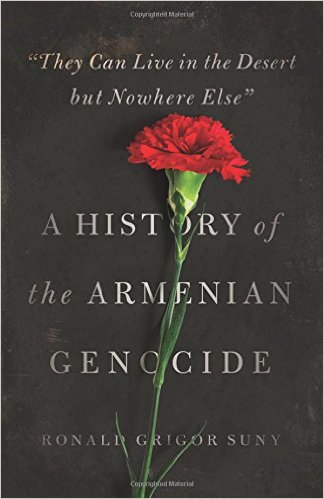
"They Can Live in the Desert but Nowhere Else": A History of the Armenian Genocide"

Ronald Grigor Suny, ""They Can Live in the Desert but Nowhere Else": A History of the Armenian Genocide" 2015 | ISBN-10: 0691147302 | 490 pages
 
Starting in early 1915, the Ottoman Turks began deporting and killing hundreds of thousands of Armenians in the first major genocide of the twentieth century. By the end of the First World War, the number of Armenians in what would become Turkey had been reduced by ninety percent--more than a million people. A century later, the Armenian Genocide remains controversial but relatively unknown, overshadowed by later slaughters and the chasm separating Turkish and Armenian versions of events. In this definitive narrative history, Ronald Suny cuts through nationalist myths, propaganda, and denial to provide an unmatched account of when, how, and why the atrocities of 1915-16 were committed.


As it lost territory during the war, the Ottoman Empire was becoming a more homogenous Turkic-Muslim state, but it still contained large non-Muslim communities, including the Christian Armenians. The Young Turk leaders of the empire believed that the Armenians were internal enemies secretly allied to Russia and plotting to win an independent state. Suny shows that the great majority of Armenians were in truth loyal subjects who wanted to remain in the empire. But the Young Turks, steeped in imperial anxiety and anti-Armenian bias, became convinced that the survival of the state depended on the elimination of the Armenians. Suny is the first to explore the psychological factors as well as the international and domestic events that helped lead to genocide.


Drawing on archival documents and eyewitness accounts, this is an unforgettable chronicle of a cataclysm that set a tragic pattern for a century of genocide and crimes against humanity.


Monday, November 16, 2015

Tigran Petrosian: His Life and Games by Vik Vasiliev

Tigran Petrosian: His Life and Games by Vik Vasiliev
English | 22 Aug. 1974 | ISBN: 071342818X | 256 Pages


Tigran Petrosian's place in history - a World Champion with a distinctive personal style - is secure. But still he is misunderstood by many of his contemporaries. As Larry Evans writes: 'Tigran Petrosian is one of the most original and mystifying players in the history of chess.' 

Sunday, November 15, 2015

The Gurdjieff Folk Instrument Ensemble & Levon Eskenian - Komitas (2015)

The Gurdjieff Folk Instrument Ensemble & Levon Eskenian - Komitas (2015) 


Levon Eskenian and the musicians of The Gurdjieff Ensemble feature the music of Komitas Vardapet (1869-1935), composer, ethnomusicologist, arranger, singer and priest, and popularly held to be the founder of contemporary music in Armenia.

"Music, its forms and rituals, has the power to bring us close to distant civilizations," says Levon Eskenian in his booklet notes. "Armenia offers a special case: a sacred culture that was preserved and presented at its fullest flowering through the work of one man, the scholar-monk Soghomon Soghomonian, known under his religious name as Komitas, to which is sometimes appended the title Vardapet (archimandrite)."

In his work as a collector of thousands of folk songs, sacred songs and instrumental melodies, Komitas explored the connections that uniquely bind together Armenian sacred and secular music. With their special focus on folk instrumentation and inspired arrangements the Gurdjieff Ensemble illuminates the deep roots of Komitas's compositions in this programme recorded in Lugano in February 2015.

The Armenian Gurdjieff Folk Instruments Ensemble was founded by Levon Eskenian to play 'ethnographically authentic' arrangements of the G.I. Gurdjieff/Thomas de Hartmann piano music. Their debut album on ECM, 'Music of Georges I. Gurdjieff', was widely acclaimed, and won an Edison Award as Album of the Year in 2012.

Tracklist:

1. Zulo
2. Mani Asem, Tsaghik Asem
3. Msho Shoror
4. Havun
5. Mankakan Nvag XII
6. Lorva Gutanerg
7. Seven Dances: Manushaki of Vagharshapat
8. Seven Dances: Shushiki of Vagharshapat
9. Seven Dances: Unabi of Shushi
10. Seven Dances: Marali of Shushi
11. Seven Dances: Yerangui of Yerevan
12. Seven Dances: Het u Araj of Karin
13. Seven Dances: Karno Shoror
14. Hov Arek
15. Gutane Hats Em Berum
16. Hoy, Nazan
17. Havik
18. Akna Oror

Sunday, October 11, 2015

Sasun: The History of an 1890s Armenian Revolt by Justin McCarthy and Ömer Turan

Sasun: The History of an 1890s Armenian Revolt by Justin McCarthy and Ömer Turan
English | 2014 | ISBN: 160781384X | 496 pages


Sasun, a region of Anatolia formerly under Ottoman rule and today part of eastern Turkey, is frequently described as the site where, in 1894, the Turks massacred large numbers of Armenian Christians, with estimates ranging from 3,000 to 10,000 people. News reports at the time detailed that gruesome acts, including torture, had occurred at Sasun at the hands of the Ottoman army. The Ottoman Empire denied these allegations. A commission of European delegates sent to investigate the matter concluded that the news reports were highly exaggerated, yet the original stories of atrocities have persisted. This volume provides a close examination of the historical evidence to shed light on what happened at Sasun. The authors' research indicates that the stories circulated by the media of torture and murder in Sasun don't hold up against the findings of the European investigators. Evidence instead shows that an Armenian revolt led to fights with local Kurds and many fewer deaths, on both sides, and that the conflict had largely subsided before the arrival of the Ottoman army.

1. Sasun
2. Conflict in Sasun
3. Sasun in the Pressâ
4. The Missionaries
5. Publicists for the Armenian Cause
6. The British and Others
7. The Commission I
8. The Commission II
9. Conclusion
Appendix A. The Hallward Report
Appendix B. The Testimony of Colonel Tevfik
Appendix C. Report of the Consular Delegates
Appendix D. The Hampson Report
Bibliographical Note: Modern Histories of Sasun
Endnotes
Selected Bibliography
Index

Saturday, August 29, 2015

Parsegh Ganatchian: Complete Works - Choral, Romance & Children's Songs

Parsegh Ganatchian: Complete Works - Choral, Romance & Children's Songs (Tigran Hekekian, Armenian State Radio & TV Chamber Choir, Little Singers of Armenia) [2008]

This set of 3 cds, comprises the complete works of Armenian composer Parsegh Ganatchian, one of the most illustrious pupils of Komitas, the father of Armenian music. This collection is the product of a long and painstaking effort to collect and showcase all of his choral compositions, solo songs and childrens's songs. The recordings took place in Yerevan with the participation of the Armenian State Radio and Television Chamber Choir, the children's choir "Little Singers of Armenia" and various well known professional soloists, under the artistic direction of acclaimed conductor Tigran Hekekian..

Performer:
Armenian State Radio & TV Chamber Choir
Little Singers of Armenia
Tigran Hekekian

Tracklisting:
CD1
01. Shousho (03:26)
02. Haireni Karot (02:56)
03. Hop Kuluzar (02:19)
04. Dzov Acher (02:50)
05. Bam, Porotan (01:29)
06. Varderi Het (05:11)
07. Oror (for chorus) (03:54)
08. Bjingo (01:25)
09. Naro Jan (03:53)
10. Sossin (04:15)
11. Dzenkele, Menkele (02:49)
12. Ourin (03:05)
13. Khnjouyk (03:53)
14. Maralo (03:47)
15. Kailerg Kamavornerou (01:27)
16. Tzaigerg (02:34)
17. Dalilo (05:01)
CD2
01. Nanor (14:25)
02. Khaghagh Gisher (03:26)
03. Garoun Yekav (01:15)
04. Alvardi Yeraze (02:34)
05. Nennir Nai (04:42)
06. Hele Hele (02:34)
07. Gorani (06:09)
08. Dzidzernak (02:35)
09. Kamnerg (02:39)
10. Lousnakn Yelav (Quartet) (02:54)
11. Razmerg (01:54)
12. Oror (Lullaby) (03:59)
13. Hoy Nar (04:21)
CD3
01. Maireni Dorotz (Hymn to Our School) (01:53)
02. Park Mair Hoghin (Glory to the Motherland) (01:37)
03. Dzite (The Finch) (00:45)
04. Lousin (The Moon) (01:30)
05. Meghou (The Bee) (00:55)
06. Sev ampere (The Black Clouds) (01:25)
07. Giughi Artoun (Morning in the Village) (00:49)
08. Little Singers of Armenia / Inch Anoush (How Sweet) (01:33)
09. Dzenkele, Menkele ( A Bird's Song) (01:43)
10. Amper (Clouds) (01:14)
11. Menk Ke Sirenk (We Love) (00:42)
12. Ardviknerou Kailerg (Girl Scouts' March) (01:24)
13. Khnotzi (The Churn) (01:03)
14. Jakharak (The Spindle) (02:04)
15. Khakhag Gisher (Tranquil Night) (02:37)
16. Yerganevag (Children's Orchestra) (01:55)
17. Dzidzemakin Bouyne (The Swallow's Nest) (02:02)
18. Dprotzakan Kailerg (School March) (01:37)
19. Haireni Karot (Nostalgia for the Homeland) (02:35)

Monday, July 27, 2015

Tigran Hamasyan - Mockroot (2015)


Tigran Hamasyan’s Nonesuch Records debut album, Mockroot, features music draws from a wide range of sources—from jazz and Armenian folk music; Bach and French fin de siècle composers; dubstep, thrash metal, and contemporary electronica. His live performances and six studio albums have received enthusiastic approval from the likes of Herbie Hancock, Chick Corea, and Brad Mehldau.


Reviews: Nonesuch Records will release the label debut from pianist Tigran Hamasyan, Mockroot, in early 2015. Hamasyan is currently on tour in Europe, with shows in France, Germany, Netherlands, Belgium, and Switzerland, amongst others. Further details about the forthcoming album and its release will be announced shortly, along with additional international tour dates. For all the tour details, visit nonesuch.com/on-tour.
Although trained as a classical and jazz musician, Tigran Hamasyan draws on a wide range of influences, including Armenian folk music, electronica, poetry, and more. In the past decade, with the release of four critically acclaimed albums and an unceasing touring schedule, he has built up a dedicated international following, as well as accolades from the likes of Chick Corea, Herbie Hancock, and Brad Mehldau. In the words of the Guardian, Hamasyan "is guided by one of [mentor and fan Herbie Hancock’s] most enduring lessons: it's possible to be a multi-stylistic jazz virtuoso and a groove-powered hitmaker simultaneously and hugely enjoy all of it." The Times of London said of his most recent release, 2013’s Shadow Theater, "Armenian folk, electronic loops, heavenly voices and indie rock energy vie with Hamasyan’s rippling piano to create a dramatic, deeply melodic music unlike anything else you’ll hear this year." In a review of a Los Angeles concert earlier this year, LA Weekly proclaimed, "Shadow Theater’s intricate blend of timbres, rhythmic complexity, and melodic references to his Armenian heritage were clearly a hit for this crowd. At the same time, the playful deployment of electronics, loops, and unstoppable dance grooves would have fit in perfectly at Coachella."
Hamasyan was born in Armenia in 1987, before relocating with his family to Los Angeles in 2003. He currently resides in Erevan, Armenia. He began playing piano at the age of three, and started performing in festivals and competitions when he was 11 years old, winning the Montreux Jazz Festival’s piano competition in 2003. He released his debut album, World Passion, at the age of 18 in 2006. That same year he won the prestigious Thelonious Monk International Jazz Piano Competition. Subsequent albums include New Era (2008), Red Hail (2009), and A Fable (2011), for which he was awarded a Victoires de la Musique (the equivalent of a Grammy Award in France). Most recently he won the Vilcek Prize for Creative Promise in Contemporary Music in 2013.


Tracklisting:

01 - To Love
02 - Song for Melan and Rafik
03 - Kars 1
04 - Double-Faced
05 - The Roads That Bring Me Closer to You
06 - Lilac
07 - Entertain Me
08 - The Apple Orchard in Saghmosavanq
09 - Kars 2 (Wounds of the Centuries)
10 - To Negate
11 - The Grid
12 - Out of The Grid

Recorded May 2014 at Studio de Meudon in Meudon, France.
Mastering engineer: Nate Wood.

Musicians:
Tigran Hamasyan - piano, voice, keyboards, synths, sound effects
Sam Minaie - electric bass
Arthur Hnatek - drums & live electronics
Gayanée Movsisyan - voice on track "5"