Wednesday, September 28, 2016

Armenia: Life in a Suitcase - Al Jazeera World


Filmmaker: Ahmet Seven
As the Armenian economy continues to struggle, so do its people. Around a third of the country's population lives below the poverty line and the price of everyday items is often too high for many people.
Over the years, hundreds of thousands of Armenians have emigrated in search of work and a decent living. There is tension between Armenia and Turkey and the border with Turkey has been closed since 1993. But this doesn’t stop many Armenians, often women, making the journey via Georgia, either to live long-term or making regular trips, buying cheaper goods in Turkey to sell back home.
This film tells the poignant story of two Armenian women unable to survive at home and who leave their families to join the many economic migrants, hoping to find jobs to enable them to support themselves and their dependents. 
Getting old doesn't mean dying... I'll live as long as it takes to reach my goal of helping my children.
Anahit Donoyan
Anahit Donoyan first lost her husband when he was only 50 - and then 30 family members in the Armenian earthquake in 1988. She moved to Istanbul and did a series of manual jobs to survive.
"I worked in a factory and at a restaurant. I cleaned hallways at night. I took care of babies. I would steam corn and sell it by the sea. Then I was a housekeeper. All kinds of work. I'm not ashamed because I was providing for my children," says 73 year-old Anahit.  
Now, too old for physical work, she makes a living selling Armenian food products to other immigrants in Turkey, out of a suitcase on the streets of Istanbul.
She has lived and worked in Turkey for more than 18 years, managed to avoid trouble with the authorities - and still tries to find a little bit extra to send back to her family in Armenia and Russia.
"I've been setting up a stall and selling my goods here for five years. No one's ever asked me what I was doing here. Never. Everyone's fond of me and I'm fond of them."
Karine Galstyan is also Armenian and came to Turkey looking for work in 2004. After marrying a Turkish man, her residency and work status are a lot more stable, allowing her easier transit between Turkey and Armenia. 
"It was very difficult for me. I would lie in bed at night and my mind was in Armenia with my children. But, as a mother, I suffered to make sure my children were taken care of," she remembers.
Karine buys cheap clothes in Istanbul and takes them in a suitcase to sell in Armenia a couple of times a month, earning around $300 a tripWith shoes costing over $20 in Armenia but as little as $2 in Istanbul, Karine has seized the business opportunity, buying in one place to trade up in the other.
Despite the distance from their families and the tough existence they’re forced to lead to make ends meet, the two women are driven by the need to support the ones they love. Their desire to provide and care trumps their separation from their families.  
"I love Istanbul. People love a place if they have a good life and are making a good living," says Galstyan. 
Source: AI Jazeera

Wednesday, April 20, 2016

Living in the Ottoman Realm: Empire and Identity, 13th to 20th Centuries

Christine Isom-Verhaaren, Kent F. Schull, "Living in the Ottoman Realm: Empire and Identity, 13th to 20th Centuries"
2016 | ISBN-10: 0253019435, 0253019303 | 384 pages |

Living in the Ottoman Realm brings the Ottoman Empire to life in all of its ethnic, religious, linguistic, and geographic diversity. The contributors explore the development and transformation of identity over the long span of the empire’s existence. They offer engaging accounts of individuals, groups, and communities by drawing on a rich array of primary sources, some available in English translation for the first time. These materials are examined with new methodological approaches to gain a deeper understanding of what it meant to be Ottoman. Designed for use as a course text, each chapter includes study questions and suggestions for further reading.

Contents
Introduction: Dealing with Identity in the Ottoman Empire
Christine Isom-Verhaaren and Kent F. Schull 1
 
Part I. 13th through 15th Centuries | Emergence and Expansion:
From Frontier Beylik to Cosmopolitan Empire

1 The Giving Divide: Food Gifts and Social Identity in Late Medieval Anatolia Nicolas Trépanier
2 Changing Perceptions along the Frontiers: The Moving Frontier with Rum in Late Medieval Anatolian Frontier Narratives Zeynep Aydoğan
3 The Genoese of Pera in the Fifteenth Century: Draperio and Spinola Families F. Özden Mercan
4 From Byzantine Aristocracy to Ottoman Ruling Elite: Mahmud Pasha Angelović and His Christian Circle, 1458–1474 Theoharis Stavrides
5 Interpreting Ottoman Identity with the Historian Neşri Murat Cem Mengüç
6 A Shaykh, a Prince, and a Sack of Corn: An Anatolian Sufi Becomes Ottoman Hasan Karataş
Part II. 15th through 17th Centuries | Expansion and Cultural Splendor: The Creation of a Sunni Islamic Empire
7 Ibn-i Kemal’s Confessionalism and the Construction of an Ottoman Islam Nabil Al-Tikriti
8 Becoming Ottoman in Sixteenth-Century Aintab Leslie Peirce
9 Making Jerusalem Ottoman Amy Singer
10 Ibrahim ibn Khidr al-Qaramani: A Merchant and Urban Notable of Early Ottoman Aleppo Charles Wilkins
11 Mihrimah Sultan: A Princess Constructs Ottoman Dynastic Identity Christine Isom-Verhaaren
 
Part III. 17th through 18th Centuries | Upheaval and Transformation: From Conquest to Administrative State
12 The Sultan’s Advisors and Their Opinions on the Identity of the Ottoman Elite, 1580–1653 Linda T. Darling
13 Fleeing “the Vomit of Infidelity”: Borders, Conversion, and Muslim Women’s Agency Eric Dursteler
14 Policing Morality: Crossing Gender and Communal Boundaries in an Age of Political Crisis and Religious Controversy Fariba Zarinebaf
15 Leaving France, “Turning Turk,” Becoming Ottoman: The Transformation of Comte Claude-Alexandre de Bonneval into Humbaraci Ahmed Pasha Julia Landweber
16 Out of Africa, into the Palace: The Ottoman Chief Harem Eunuch Jane Hathaway
17 The Province Goes to the Center: The Case of Hadjiyorgakis Kornesios, Dragoman of Cyprus Antonis Hadjikyriacou
 
Part IV. 19th through 20th Centuries | Modernity, Mass Politics, and Nationalism: From Empire to Nation-State
18 Ruler Visibility, Modernity, and Ethnonationalism in the Late Ottoman Empire Darin N. Stephanov
19 Muslims’ Contributions to Science and Ottoman Identity M. Alper Yalçınkaya
20 Migrants, Revolutionaries, and Spies: Surveillance, Politics, and Ottoman Identity in the United States David Gutman
21 A Cappadocian in Athens, an Athenian in Smyrna, and a Parliamentarian in Istanbul: The Multiple Personae and Loyalties of Pavlos Carolidis Vangelis Kechriotis
22 Zionism in the Era of Ottoman Brotherhood Michelle U. Campos
Connections and Questions to Consider
Bibliography
Contributors
Index


Monday, March 28, 2016

Edward J. Erickson, "Ottomans and Armenians: A Study in Counterinsurgency"

Edward J. Erickson, "Ottomans and Armenians: A Study in Counterinsurgency"
2013 | ISBN-10: 1137563869, 1137362200 | 299 pages | PDF | 2 MB

This book offers a comprehensive look at the growth and activities of the Armenian revolutionary committees and the corresponding Ottoman counterinsurgency responses from 1890-1915.
Contents
Introduction
1 Insurgency by Committee
2 Counterinsurgency in the Empire’s Core
3 Counterinsurgency in the Periphery
4 A Template for Destruction
5 Invisible Armies
6 Readiness for War
7 Irregular War in Caucas and in the Levant
8 Enemies Within
9 A New Course of Action
10 Aftermath
Appendix A: The Relocation Antitheses
Notes
Bibliography
Index

Friday, December 18, 2015

Thomas de Waal, "The Caucasus: An Introduction"

 
Thomas de Waal, "The Caucasus: An Introduction" English | ISBN: 0195399765, 0195399773 | 2010 | 272 pages
 
In this fascinating book, noted journalist Thomas de Waal--author of the highly acclaimed Black Garden--makes the case that while the Caucasus is often treated as a sub-plot in the history of Russia, or as a mere gateway to Asia, the five-day war in Georgia, which flared into a major international crisis in 2008, proves that this is still a combustible region, whose inner dynamics and history deserve a much more complex appreciation from the wider world.

In The Caucasus, de Waal provides this richer, deeper, and much-needed appreciation, one that reveals that the South Caucasus--Armenia, Azerbaijan, and Georgia, and their many smaller regions, enclaves, and breakaway entities--is a fascinating and distinct world unto itself. Providing both historical background and an insightful analysis of the period after 1991, de Waal sheds light on how the region has been scarred by the tumultuous scramble for independence and the three major conflicts that broke out with the end of the Soviet Union--Nagorny Karabakh, Abkhazia, and South Ossetia. The book examines the region as a major energy producer and exporter; offers a compelling account of the Rose Revolution in Georgia, the rise of Mikheil Saakashvili, and the August 2008 war; and considers the failure of the South Caucasus, thus far, to become a single viable region. In addition, the book features a dozen or so "boxes" which provide brief snapshots of such fascinating side topics as the Kurds, Turkish-Armenian rapprochement, the promotion of the region as the "Soviet Florida," and the most famous of all Georgians, Stalin.

The Caucasus delivers a vibrantly written and timely account of this turbulent region, one that will prove indispensable for all concerned with world politics. It is, as well, a stimulating read for armchair travelers and for anyone curious about far-flung corners of the world.


Wednesday, December 9, 2015

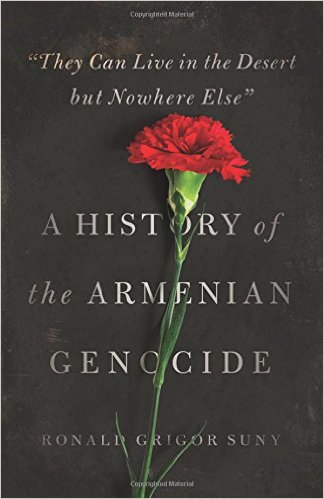
"They Can Live in the Desert but Nowhere Else": A History of the Armenian Genocide"

Ronald Grigor Suny, ""They Can Live in the Desert but Nowhere Else": A History of the Armenian Genocide" 2015 | ISBN-10: 0691147302 | 490 pages
 
Starting in early 1915, the Ottoman Turks began deporting and killing hundreds of thousands of Armenians in the first major genocide of the twentieth century. By the end of the First World War, the number of Armenians in what would become Turkey had been reduced by ninety percent--more than a million people. A century later, the Armenian Genocide remains controversial but relatively unknown, overshadowed by later slaughters and the chasm separating Turkish and Armenian versions of events. In this definitive narrative history, Ronald Suny cuts through nationalist myths, propaganda, and denial to provide an unmatched account of when, how, and why the atrocities of 1915-16 were committed.


As it lost territory during the war, the Ottoman Empire was becoming a more homogenous Turkic-Muslim state, but it still contained large non-Muslim communities, including the Christian Armenians. The Young Turk leaders of the empire believed that the Armenians were internal enemies secretly allied to Russia and plotting to win an independent state. Suny shows that the great majority of Armenians were in truth loyal subjects who wanted to remain in the empire. But the Young Turks, steeped in imperial anxiety and anti-Armenian bias, became convinced that the survival of the state depended on the elimination of the Armenians. Suny is the first to explore the psychological factors as well as the international and domestic events that helped lead to genocide.


Drawing on archival documents and eyewitness accounts, this is an unforgettable chronicle of a cataclysm that set a tragic pattern for a century of genocide and crimes against humanity.


Monday, November 16, 2015

Tigran Petrosian: His Life and Games by Vik Vasiliev

Tigran Petrosian: His Life and Games by Vik Vasiliev
English | 22 Aug. 1974 | ISBN: 071342818X | 256 Pages


Tigran Petrosian's place in history - a World Champion with a distinctive personal style - is secure. But still he is misunderstood by many of his contemporaries. As Larry Evans writes: 'Tigran Petrosian is one of the most original and mystifying players in the history of chess.' 

Sunday, November 15, 2015

The Gurdjieff Folk Instrument Ensemble & Levon Eskenian - Komitas (2015)

The Gurdjieff Folk Instrument Ensemble & Levon Eskenian - Komitas (2015) 


Levon Eskenian and the musicians of The Gurdjieff Ensemble feature the music of Komitas Vardapet (1869-1935), composer, ethnomusicologist, arranger, singer and priest, and popularly held to be the founder of contemporary music in Armenia.

"Music, its forms and rituals, has the power to bring us close to distant civilizations," says Levon Eskenian in his booklet notes. "Armenia offers a special case: a sacred culture that was preserved and presented at its fullest flowering through the work of one man, the scholar-monk Soghomon Soghomonian, known under his religious name as Komitas, to which is sometimes appended the title Vardapet (archimandrite)."

In his work as a collector of thousands of folk songs, sacred songs and instrumental melodies, Komitas explored the connections that uniquely bind together Armenian sacred and secular music. With their special focus on folk instrumentation and inspired arrangements the Gurdjieff Ensemble illuminates the deep roots of Komitas's compositions in this programme recorded in Lugano in February 2015.

The Armenian Gurdjieff Folk Instruments Ensemble was founded by Levon Eskenian to play 'ethnographically authentic' arrangements of the G.I. Gurdjieff/Thomas de Hartmann piano music. Their debut album on ECM, 'Music of Georges I. Gurdjieff', was widely acclaimed, and won an Edison Award as Album of the Year in 2012.

Tracklist:

1. Zulo
2. Mani Asem, Tsaghik Asem
3. Msho Shoror
4. Havun
5. Mankakan Nvag XII
6. Lorva Gutanerg
7. Seven Dances: Manushaki of Vagharshapat
8. Seven Dances: Shushiki of Vagharshapat
9. Seven Dances: Unabi of Shushi
10. Seven Dances: Marali of Shushi
11. Seven Dances: Yerangui of Yerevan
12. Seven Dances: Het u Araj of Karin
13. Seven Dances: Karno Shoror
14. Hov Arek
15. Gutane Hats Em Berum
16. Hoy, Nazan
17. Havik
18. Akna Oror

Sunday, October 11, 2015

Sasun: The History of an 1890s Armenian Revolt by Justin McCarthy and Ömer Turan

Sasun: The History of an 1890s Armenian Revolt by Justin McCarthy and Ömer Turan
English | 2014 | ISBN: 160781384X | 496 pages


Sasun, a region of Anatolia formerly under Ottoman rule and today part of eastern Turkey, is frequently described as the site where, in 1894, the Turks massacred large numbers of Armenian Christians, with estimates ranging from 3,000 to 10,000 people. News reports at the time detailed that gruesome acts, including torture, had occurred at Sasun at the hands of the Ottoman army. The Ottoman Empire denied these allegations. A commission of European delegates sent to investigate the matter concluded that the news reports were highly exaggerated, yet the original stories of atrocities have persisted. This volume provides a close examination of the historical evidence to shed light on what happened at Sasun. The authors' research indicates that the stories circulated by the media of torture and murder in Sasun don't hold up against the findings of the European investigators. Evidence instead shows that an Armenian revolt led to fights with local Kurds and many fewer deaths, on both sides, and that the conflict had largely subsided before the arrival of the Ottoman army.

1. Sasun
2. Conflict in Sasun
3. Sasun in the Pressâ
4. The Missionaries
5. Publicists for the Armenian Cause
6. The British and Others
7. The Commission I
8. The Commission II
9. Conclusion
Appendix A. The Hallward Report
Appendix B. The Testimony of Colonel Tevfik
Appendix C. Report of the Consular Delegates
Appendix D. The Hampson Report
Bibliographical Note: Modern Histories of Sasun
Endnotes
Selected Bibliography
Index

Saturday, August 29, 2015

Parsegh Ganatchian: Complete Works - Choral, Romance & Children's Songs

Parsegh Ganatchian: Complete Works - Choral, Romance & Children's Songs (Tigran Hekekian, Armenian State Radio & TV Chamber Choir, Little Singers of Armenia) [2008]

This set of 3 cds, comprises the complete works of Armenian composer Parsegh Ganatchian, one of the most illustrious pupils of Komitas, the father of Armenian music. This collection is the product of a long and painstaking effort to collect and showcase all of his choral compositions, solo songs and childrens's songs. The recordings took place in Yerevan with the participation of the Armenian State Radio and Television Chamber Choir, the children's choir "Little Singers of Armenia" and various well known professional soloists, under the artistic direction of acclaimed conductor Tigran Hekekian..

Performer:
Armenian State Radio & TV Chamber Choir
Little Singers of Armenia
Tigran Hekekian

Tracklisting:
CD1
01. Shousho (03:26)
02. Haireni Karot (02:56)
03. Hop Kuluzar (02:19)
04. Dzov Acher (02:50)
05. Bam, Porotan (01:29)
06. Varderi Het (05:11)
07. Oror (for chorus) (03:54)
08. Bjingo (01:25)
09. Naro Jan (03:53)
10. Sossin (04:15)
11. Dzenkele, Menkele (02:49)
12. Ourin (03:05)
13. Khnjouyk (03:53)
14. Maralo (03:47)
15. Kailerg Kamavornerou (01:27)
16. Tzaigerg (02:34)
17. Dalilo (05:01)
CD2
01. Nanor (14:25)
02. Khaghagh Gisher (03:26)
03. Garoun Yekav (01:15)
04. Alvardi Yeraze (02:34)
05. Nennir Nai (04:42)
06. Hele Hele (02:34)
07. Gorani (06:09)
08. Dzidzernak (02:35)
09. Kamnerg (02:39)
10. Lousnakn Yelav (Quartet) (02:54)
11. Razmerg (01:54)
12. Oror (Lullaby) (03:59)
13. Hoy Nar (04:21)
CD3
01. Maireni Dorotz (Hymn to Our School) (01:53)
02. Park Mair Hoghin (Glory to the Motherland) (01:37)
03. Dzite (The Finch) (00:45)
04. Lousin (The Moon) (01:30)
05. Meghou (The Bee) (00:55)
06. Sev ampere (The Black Clouds) (01:25)
07. Giughi Artoun (Morning in the Village) (00:49)
08. Little Singers of Armenia / Inch Anoush (How Sweet) (01:33)
09. Dzenkele, Menkele ( A Bird's Song) (01:43)
10. Amper (Clouds) (01:14)
11. Menk Ke Sirenk (We Love) (00:42)
12. Ardviknerou Kailerg (Girl Scouts' March) (01:24)
13. Khnotzi (The Churn) (01:03)
14. Jakharak (The Spindle) (02:04)
15. Khakhag Gisher (Tranquil Night) (02:37)
16. Yerganevag (Children's Orchestra) (01:55)
17. Dzidzemakin Bouyne (The Swallow's Nest) (02:02)
18. Dprotzakan Kailerg (School March) (01:37)
19. Haireni Karot (Nostalgia for the Homeland) (02:35)

Monday, July 27, 2015

Tigran Hamasyan - Mockroot (2015)


Tigran Hamasyan’s Nonesuch Records debut album, Mockroot, features music draws from a wide range of sources—from jazz and Armenian folk music; Bach and French fin de siècle composers; dubstep, thrash metal, and contemporary electronica. His live performances and six studio albums have received enthusiastic approval from the likes of Herbie Hancock, Chick Corea, and Brad Mehldau.


Reviews: Nonesuch Records will release the label debut from pianist Tigran Hamasyan, Mockroot, in early 2015. Hamasyan is currently on tour in Europe, with shows in France, Germany, Netherlands, Belgium, and Switzerland, amongst others. Further details about the forthcoming album and its release will be announced shortly, along with additional international tour dates. For all the tour details, visit nonesuch.com/on-tour.
Although trained as a classical and jazz musician, Tigran Hamasyan draws on a wide range of influences, including Armenian folk music, electronica, poetry, and more. In the past decade, with the release of four critically acclaimed albums and an unceasing touring schedule, he has built up a dedicated international following, as well as accolades from the likes of Chick Corea, Herbie Hancock, and Brad Mehldau. In the words of the Guardian, Hamasyan "is guided by one of [mentor and fan Herbie Hancock’s] most enduring lessons: it's possible to be a multi-stylistic jazz virtuoso and a groove-powered hitmaker simultaneously and hugely enjoy all of it." The Times of London said of his most recent release, 2013’s Shadow Theater, "Armenian folk, electronic loops, heavenly voices and indie rock energy vie with Hamasyan’s rippling piano to create a dramatic, deeply melodic music unlike anything else you’ll hear this year." In a review of a Los Angeles concert earlier this year, LA Weekly proclaimed, "Shadow Theater’s intricate blend of timbres, rhythmic complexity, and melodic references to his Armenian heritage were clearly a hit for this crowd. At the same time, the playful deployment of electronics, loops, and unstoppable dance grooves would have fit in perfectly at Coachella."
Hamasyan was born in Armenia in 1987, before relocating with his family to Los Angeles in 2003. He currently resides in Erevan, Armenia. He began playing piano at the age of three, and started performing in festivals and competitions when he was 11 years old, winning the Montreux Jazz Festival’s piano competition in 2003. He released his debut album, World Passion, at the age of 18 in 2006. That same year he won the prestigious Thelonious Monk International Jazz Piano Competition. Subsequent albums include New Era (2008), Red Hail (2009), and A Fable (2011), for which he was awarded a Victoires de la Musique (the equivalent of a Grammy Award in France). Most recently he won the Vilcek Prize for Creative Promise in Contemporary Music in 2013.


Tracklisting:

01 - To Love
02 - Song for Melan and Rafik
03 - Kars 1
04 - Double-Faced
05 - The Roads That Bring Me Closer to You
06 - Lilac
07 - Entertain Me
08 - The Apple Orchard in Saghmosavanq
09 - Kars 2 (Wounds of the Centuries)
10 - To Negate
11 - The Grid
12 - Out of The Grid

Recorded May 2014 at Studio de Meudon in Meudon, France.
Mastering engineer: Nate Wood.

Musicians:
Tigran Hamasyan - piano, voice, keyboards, synths, sound effects
Sam Minaie - electric bass
Arthur Hnatek - drums & live electronics
Gayanée Movsisyan - voice on track "5"

Wednesday, June 17, 2015

Antonia Arslan - La Strada di Smirne


Antonia Arslan - La Strada di Smirne
La fuga è finita. Al sicuro sulla nave che li condurrà in Italia, Shushanig e figli si lasciano alle spalle le atrocità che hanno sconvolto la loro vita e quella di tante famiglie armene. Quello è il passato, conservato per sempre tra le pagine della "Masseria delle allodole." Ora, mentre in Italia i figli di Shushanig si adattano dolorosamente a una nuova realtà, Ismene, la lamentatrice greca che li ha strappati alla morte, cerca di salvare altre vite, prendendosi cura degli orfani che vagano nelle strade di Aleppo. Ma proprio quando, nella Piccola Città dove tutto ha avuto inizio, qualcuno torna per riprendere quel che gli appartiene, ogni speranza di costruire un futuro cade in frantumi. La narrazione di Antonia Arslan testimonia le vicende di un popolo condannato all'esilio e dipinge un mondo vivo e pulsante di donne e uomini straordinari.

Antonia Arslan - The Road to Smyrna
The flight is over. Safe on the ship that will take them in Italy, Shushanig and children they leave behind the atrocities that have disrupted their lives and that of many Armenian families. That's the past, preserved forever in the pages of "Masseria of larks." Now, while in Italy the children of Shushanig painfully adapt to a new reality, Ismene, the Greek mourner who has torn them to death, trying to save lives, taking care of orphans who roam the streets of Aleppo. But just when the Little City where it all began, someone back to resume what belongs to him, all hope of building a future falls apart. The narrative of Antonia Arslan witness the story of a people condemned to exile and paints a living, breathing world of extraordinary men and women.

Antonia Arslan - Il libro di Mush


Antonia Arslan - Il libro di Mush
In una tiepida notte di fine giugno del 1915, cinque fuggiaschi si allontanano dalle rovine del loro paese nella valle di Mush, distrutto dai turchi della terza armata con i suoi abitanti e le millenarie tradizioni del popolo armeno. Hanno perso tutto, casa e famiglia, ma hanno fortunosamente recuperato un tesoro di inestimabile valore e sono determinati a portarlo in salvo ad ogni costo. Questa è l'ultima storia dell'antichissimo Libro di Mush.

Antonia Arslan - The Book of Mush
On a warm night in late June 1915, five fugitives move away from the ruins of their country in the valley of Mush, destroyed by the Turks of the Third Army with its inhabitants and the ancient traditions of the Armenian people. They have lost everything, house and family, but luckily recovered a treasure of inestimable value, and are determined to bring him to safety at any cost. This is the last story of the ancient Book of Mush.

Sunday, May 3, 2015

History of Armenia


CONTENTS
FOREWORD
CHAPTER 1 TERRITORY OF ARMENIA IN PREHISTORIC TIMES
CHAPTER 2 FORMATION OF THE ARMENIAN PEOPLE
CHAPTER 3 THE FIRST UNIFIED ARMENAN STATE:THE VAN KINGDOM
CHAPTER 4 ARMENIA IN THE 6TH-3RD CENTURIES BC
CHAPTER 5 ARMENIAN STATE AT THE HEIGHT OF ITS POWER. THE EMPIRE OF TIGRAN                           THE GREAT
CHAPTER 6 THE GOVERNMENT AND ECONOMY OF ANCIENT ARMENIA
CHAPTER 7 THE ESTABLISHMENT OF FEUDALISM IN ARMENIA.ADOPTION OF                                           CHRISTIANITY AS STATE RELIGION
CHAPTER 8 ARMENIA BETWEEN PERSIA AND BYZANTIUM
 CHAPTER 9 ARMENIA UNDER ARAB DOMINATION. REIGN OF THE BAGRATUNI                                          DYNASTY
CHAPTER 10 THE ARMENIAN STATE IN CILICIA
CHAPTER 11 ARMENIA UNDER THE YOKE OF NOMADIC TRIBES IN THE 13TH TO 15TH CENTURIES
CHAPTER 12 ARMENIA UNDER TURKISH AND PERSIAN RULE. THE BEGINNING OF THE                             LIBERATION MOVEMENT
CHATER 13 ADJUNCTION OF EASTERN ARMENIA TO RUSSIA. ARMENIA WITHIN THE                              RUSSIAN EMPIRE
CHAPTER 14 NATIONAL LIBERATION STRUGGLE OF THE ARMENIAN PEOPLE IN THE SECOND HALF OF THE 19th CENTURY. THE ARMENIAN QUESTION
CHAPTER 15 ARMENIAN COLONIES BEFORE THE 20th CENTURY
CHAPTER 16 ARMENIA AT THE TURN OF THE 19th AND THE BEGINNING OF THE 20th                                   CENTURY
CHAPTER 17 WORLD WAR I. THE ARMENIAN GENOCIDE
CHAPTER 18 THE FALL OF THE RUSSIAN EMPIRE AND ARMENIA
CHAPTER 19 THE FIRST REPUBLIC OF ARMENIA
CHAPTER 20 THE FALL OF THE FIRST REPUBLIC. THE ESTABLISHMENT OF SOVIET RULE                           IN ARMENIA
CHAPTER 21 THE SECOND (SOVIET) REPUBLIC OF ARMENIAPARTICIPATION OF THE                                 ARMENIANS IN WWII
CHAPTER 22 THE THIRD REPUBLIC OF ARMENIA
CHAPTER 23 ARMENIA AT THE THRESHOLD OF THE THIRD MILLENNIUM
CHAPTER 24 THE ARMENIAN DIASPORA: THE PAST AND PRESENT
                        CHRONOLOGY

ABOUT THE AUTHOR

          Dr. Armen Khachikyan is Associate Professor of History at Yerevan State Linguistic University named after V. Brussov. He gains his PhD in 1988 from Institute of Oriental Studies of National Academy of Sciences and in 1991 was awarded with academic status of Docent (Associate Professor) by USSR State Committee on Education.
          Earlier in his career Mr. Khachikyan taught at the Armenian State Pedagogical University and at the  European Regional Academy in Armenia. He is the author of a monograph titled “Armenia in the sphere of international policy at the threshold and beginning of our Era” (1999) and over 20 scholarly articles and studies on the methodology of instruction of history, published in Armenian, Russian and English. His
research focuses on K-12 curriculum and textbook development for the subject of History.
          Mr. Khachikyan has co-authored a textbook on “Ancient history” for fifth form which was in use at Armenian schools in 2000-2008, and a Civic Education Course for Distance Learning for secondary schools in Armenia. Together with Georgian and Azerbaijani colleagues, he has also co-authored a book titled “History of the South Caucasus Countries: a multiperspective view on history” (2009).
          In 2003, Mr. Khachikyan was a Fulbright Senior Program Scholar at the U.S. Library of Congress. He is an active participant and contributor to numerous international conferences, seminars, symposia and workshops on issues related to education, from preschool to graduate. Mr. Khachikyan serves as a Member of the Working Group on National Curriculum and Textbook Development for World History, and an Advisor on Curriculum Development at the Armenian Fulbright Fellows Association.
          Mr. Khachikyan is married, has two daughters.

Sunday, April 26, 2015

The Cut (2014)


The Cut (2014)

Language: English | Genre: Drama, History | Subtitles: None

This film is based on the Armenian Genocide in the Ottoman Empire 1915, which resulted in the forced migration and diaspora of the Armenian minority. One day a young family man, Nazaret Manoogian, gets deported by the Turkish authorities together with all the other Armenian men from his native village of Mardin. He becomes a forced laborer and only survives the mass murder by chance and an act of kindness, but loses his family, speech and faith. One night the devastated Nazaret learns that his daughters may still be alive and didn't die like his wife from starvation, violence or rape on death marches. Nazaret goes on a quest to find them and travels from his small village through the Mesopotamian deserts to the sea, always looking for clues that might lead him to his children. Nazaret's epic journey will take him from Asia to America, from the end to a new beginning...

Director: Fatih Akin
Writers: Fatih Akin (screenplay), Mardik Martin
Stars: Tahar Rahim, Simon Abkarian, Makram Khoury
Country: Germany | France | Poland | Italy | Canada | Turkey
Also Known As: Il padre
Ratings: 6.0/10 from 1,149 users


Sunday, April 19, 2015

The Post-Soviet Wars


Contents
Preface
1 Introduction: War and Peace in the Caucasus
2 Setting the Stage: The Past, the Nation, and the State
3 Making Sense: Conflict Theory and the Caucasus
4 Wars over Chechnya
5 Wars in Georgia
6 The War over Karabakh
7 Wars That Did Not Happen: Dagestan and Ajaria
8 Conclusion: Post-Soviet Wars and Theories of Internal
Wars
Notes
Bibliography
Index
About the Author

Tuesday, February 24, 2015

The Making of Modern Turkey: Nation and State in Eastern Anatolia, 1913-50 By Ugur Umit Ungor


Contents
1. Nationalism and Population Politics in the Late Ottoman Empire
2. Genocide of Christians, 1915-16
3. Deportations of Kurds, 1916-34
4. Culture and Education in the Eastern Provinces
5. The Calm after the Storm: The Politics of Memory
Conclusion
Bibliography
Index

Wednesday, February 18, 2015

The Armenian Rebellion at Van by Justin McCarthy

The Armenian Rebellion at Van (Utah Series in Turkish and Islamic Stud) by Justin McCarthy

English | 2006 | ISBN: 0874808707 | 304 Pages | PDF | 2 MB

Before World War I, the ancient city of Van in southeastern Anatolia had a population of approximately 100,000 people, while the population of Van Province was about 500,000. Armenians formed a large minority, with Kurdish tribes and Turks in the majority. The Armenian Rebellion at Van presents a long-overdue examination of Van from the 1870s to 1919. As the authors state, "The Armenian Revolt was an integral part of the great disaster that overcame the people of the Ottoman East. The slaughter of Muslims that accompanied the Armenian revolt in Van Province inexorably led first to Kurdish reprisals on the Armenians, then to a general and mutual massacre of the people of the East." The actions at Van offer a window into the far-reaching events that soon followed in other parts of Anatolia.  

Sunday, December 28, 2014

"Great Catastrophe: Armenians and Turks Come to Terms with Genocide, Memory, and Identity"

Great Catastrophe: Armenians and Turks Come to Terms with Genocide, Memory, and Identity

Contents

Author’s Note
Map 1. The Ottoman Empire in 1914
Map 2. Turkey in 2014
Introduction: Requiem in Diyarbakir
1. The Catastrophe
2. The History
3. From Van to Lausanne, 1915–1923
4. Aspects of Forgetting
5. Postwar Politics
6. Awakening, 1965
7. Assailing Turkey
8. A Turkish Thaw
9. Independent Armenia
10. The Protocols
11. Hidden Histories in Diyarbakir
12. Two Memorials in Istanbul
Great Catastrophe Chronology
Notes
Index 

Friday, July 18, 2014

Гений выживания 

Архивное фото

50 лет назад, 15 июля 1964-го, первым лицом Советского Союза стал Анастас Иванович Микоян, бодрый 68-летний мужчина, который до этого четыре десятилетия, не прерываясь ни на минуту, пребывал в составе высшего советского руководства. Блистательная карьера достигла закономерного пика. Можно сказать, подошла очередь. Ведь никого из тех, с кем Микоян когда-то начинал править державой, рядом с ним на тот момент уже не оказалось.

Конечно, должность была не совсем настоящей. Хоть председатель президиума Верховного Совета СССР и величался главой государства (а за границей его называли и "президентом"), но в действительности таковым был Никита Хрущев, высший руководитель партии и правительства. Однако и марионеткой Микояна никто бы не назвал. Он был явным политическим тяжеловесом.

Повидав за последние полтора десятка лет нескольких зицпремьеров и одного зицпрезидента, мы сегодня с понятным интересом всматриваемся в уникальный опыт самого удачливого из их политических предшественников. В чем его тайна?

"Гением выживания" назвал однажды Бернардо Бертолуччи героя своего фильма "Последний император". Пу И малым ребенком воссел на трон, а закончил свои дни почтенным номенклатурщиком в маоистском Китае. И в самом деле, довольно необычный жизненный путь, требующий особых качеств. Но путь нашего Микояна был еще более необычен, а его личные качества, надо думать, были куда более особыми.

Членом ЦК он стал в 1923-м, еще при Ленине, и перестал им быть только в 1976-м, незадолго до конца брежневской эпохи. А в Политбюро Микоян пребывал с 1926-го по 1965-й, поставив абсолютный рекорд нахождения в правящей группе и пережив несколько политических поколений.

"От Ильича до Ильича без инфаркта и паралича" — эта поговорка появилась довольно поздно и прилагалась не только к нему, но и к служебным долгожителям рангом пониже.

А вот — анекдот времен микояновского карьерного расцвета. Микоян засиделся в гостях и собирается на выход. На дворе проливной дождь. Предлагают зонтик. Микоян отказывается: "Ничего, я пройду между струй". Сколько сегодняшних высших номенклатурщиков хотели бы иметь право так сказать, подводя итог своей нелегкой жизни! Об их озарениях и промахах еще расскажут историки, а заповеди Микояна можно перечислить сейчас.

Первая из них – в любом конфликте быть на стороне будущего победителя. Это требовало чутья, а нередко еще и смелости, ведь исход схваток за власть не всегда был предопределен. У Микояна осечек не случалось.

В 1926-м он вошел в высший круг на волне борьбы Сталина и Бухарина с "левой" оппозицией, заняв место главы торгово-снабженческого ведомства, освобожденное Львом Каменевым. Весной 1928-го с микояновского доклада на партийном пленуме началось победоносное наступление Сталина на "правых" — бухаринцев и рыковцев.

В 1937-м Микоян участвовал в террористической кадровой чистке, а когда надо, то и лично подписывал расстрельные списки. И к 1939-му не только уцелел, но и включился в так называемую "пятерку" — группу особо приближенных к Сталину лиц.

В 1950-х он неоднократно участвовал в верхушечных мини-переворотах и каждый раз на той стороне, которой было суждено взять верх. В 1953-м – против Берии, в 1955-м – против Маленкова. В 1956-м помогал Хрущеву разоблачить Сталина. В 1957-м вместе с ним одержал победу в почти уже проигранной схватке с "антипартийной группой". С этого момента он стал одним из самых, если не самым доверенным помощником правителя. А осенью 1964-го в ранге главы государства Микоян присоединился к заговору против Хрущева.

Годом позже его все-таки отправили в почетную отставку, сохранив членство в ЦК и другие привилегии. А ведь это было время, когда отставки даже гораздо более близких друзей Брежнева почти обязательно были непочетными.

Вторая его заповедь – всегда делать то, что соответствует, так сказать, "духу времени". Отстаивание политики НЭПа. Упразднение политики НЭПа. Ликвидация старой номенклатуры. Разоблачение сталинских преступлений против этой номенклатуры. Разоблачение хрущевского волюнтаризма. Всему свой час.

Имея репутацию человека осторожного и не склонного к резким переменам, он каждый раз, видимо, делал не совсем то, чего в душе хотел. Но делал хорошо.

И третья заповедь, без которой он определенно не стал бы долгожителем, — никогда не стремиться стать первым лицом.

Входя в высший руководящий круг, а зачастую и в особо доверенную часть этого круга, Микоян всегда был там самым скромным. И, если это слово применимо к персонам такого ранга, – самым безобидным. Это его неоднократно спасало. Хотя, говорят, Сталин все же собирался зачем-то его репрессировать накануне своей смерти. Но тут уж сказала слово судьба.

Таковы слагаемые этой истории успеха.

Хотя есть и еще несколько моментов, на которые стоит обратить внимание. Известно, например, что Микоян не раз выступал за более мягкие решения, чем те, которые были потом приняты. В 1953-м высказывался, в частности, не за расстрел Берии, а просто за понижение в должности. В 1956-м дольше прочих колебался, вводить ли в Венгрию войска. В 1964-м советовал сохранить за Хрущевым часть власти. Эта снисходительность сходила ему с рук, потому что он вовремя ее отбрасывал и полностью присоединялся к руководящему мнению. Но природной жестокости в нем явно не было.

По совокупности качеств, перед нами предстает умный, осмотрительный и незлой прагматик, великолепно умеющий плыть по течению, но готовый сделать и что-нибудь доброе — при условии, что это ему не навредит.

Характерно, что, в отличие от большинства его коллег, упоминание Микояна будит в народе скорее положительные чувства. Долгие годы и даже десятилетия он ведал снабжением. Но его ассоциируют почему-то не с голодом и дефицитами, а с вкусной едой. "Микоян" — бренд московского мясокомбината ("Поставщик Кремля с 1933 года"). Имена других членов сталинского Политбюро в качестве коммерческих брендов почему-то в ход не идут.

Получается, что Анастас Микоян – образцовый для нашего климата сановник, сумевший соединить исключительную служебную успешность с некоторой дозой человечности. И сановники сегодняшнего призыва, знай они о нем подробно, сочли бы его для себя идеалом, умудрившимся, пройдя через самые крайние времена и ничем не пожертвовав ради карьеры, оставить после себя неплохую память и даже репутацию деятеля почти что либерального толка.

Многие экс-либералы из высших властных эшелонов, переквалифицируясь сейчас в ультрадержавников, а то и просто публично симулируя помешательство, объясняют это для себя действием неодолимой силы и тем, что если они уйдут, то их кресла займут совсем уж оголтелые. Получается, что быть "микоянами" — выгодно не только для них, но и для страны.

Однако это примитивный самообман. Разумные и человечные порывы Микояна никогда не реализовывались. Ведь при первых признаках угрозы для себя он мгновенно от них отрекался. Его сегодняшние инстинктивные последователи ведут себя точно так же.

А все стоящее делается людьми совершенно другого типа, сегодня у нас во власти абсолютно немодного, — теми, кто способен рискнуть карьерой и не считает нахождение наверху высшей своей целью.

Поищите таких среди наших экс-либеральных министров-экономистов, всепонимающих чинов кремлевской администрации и многоумных казенных экспертов. Попробуйте найти хоть одного такого среди бесчисленных специалистов по хождению между струй.

Сергей Шелин

Росбалт, 16/07/2014 13:46

http://www.rosbalt.ru/blogs/2014/07/16/1292705.html

Подробнее:http://www.rosbalt.ru/blogs/2014/07/16/1292705.html